A History of and the Origins Behind Racist Claims Against Haitians in the United States in the 19th Century
Why Is This Relevant?

There has been a lot of discussion lately about Haitian immigrants since the September presidential debate. Sadly, as with most discussions of Haitian immigrants or of Haiti itself in the United States, it has devolved into racist claims about Haitians inciting violence and eating dogs. What you might not know is that this treatment of Haitian immigrants is nothing new. In fact, racist claims about Haiti have been incredibly common since the slaves that founded the country threw off the yoke of their French masters.
To demonstrate this history of racist abuse that Haitian immigrants have suffered, I thought it would be worth reviewing newspapers and periodicals that were published in certain southern states from 1804 (the formation of Haiti as a free republic) to 1860 (the start of the American Civil War). If you are confused about why I am selecting those dates, I will explain it further below, but essentially that is the period in which fearmongering about Haiti would have been at its peak, as the United States still allowed for the enslavement of persons in those selected states.
Debunking the 2024 Lies
Before I get to the history and the substance of the article, I want to point to this article from Axios. I will provide an excerpt below, as I think it explains the origins of this current round of myths concisely:
Catch up quick: The unfounded claims may have been linked to a post in a Springfield Facebook group that went viral, the Springfield News-Sun reported.
- The poster claimed their neighbor’s daughter’s friend had lost her cat and later found it hanging from a branch at a Haitian neighbor’s home, Axios’ Avery Lotz notes.
- They also alleged “rangers” and “police” had told them ducks and geese had been taken.
- Some social media users shared body camera footage of a woman in Canton, Ohio, being arrested in an unrelated incident on suspicion of “killing and eating a cat,” but Reuters reports police said she’s not an immigrant but “a life long” resident.
– Axios, Trump peddles baseless claim about immigrants “eating the pets”, viewed on September 16, 2024
You can also take a look at this article published in Newsgaurd’s Reality Check that delves more deeply into the origin of the false claims of pet eating.
Now, onto the history.
An All Too Brief History of Haiti before it was Haiti
Haiti has both a rich and tragic history, one that is worth studying and considering. It stems from the fact that Haiti is the only country in the world that was formed due to a successful slave revolt. Maroon communities (communities of escaped slaves) were not uncommon in countries with enslaved persons, but an entire country of liberated slaves is unique in history. In my opinion, Haiti is the truest example of a people rising against tyranny in this world.

Before Haiti was referred to by that name, it was the Spanish colony of Hispaniola (1492-1625), and later the French colony of Saint-Domingue (1625 – 1804). Saint-Domingue was once the wealthiest, most successful, planter colony in the entire world. It was the jewel of the Caribbean and the example that many South American colonies emulated before Haiti won its independence. Prior to the French Revolution, the colony of Saint-Domingue alone produced forty percent of all sugar imported to Europe, and sixty percent of Europe’s coffee. There was almost no strip of land in the entire world, prior to the French Revolution, that was more valuable than Saint-Domingue. And that value was produced by an absolutely brutal slave trade.
Slavery in Saint-Domingue

Prior to the French Revolution, the French imported thirty thousand slaves a year to the colony to perform the strenuous labor necessary to operate mass-scale sugar and coffee production. Haiti under French rule can be distinguished from the American South as the vast majority of the Island population were slaves. In 1789, almost half a million of the Island’s population were slaves, compared to approximately 45,000 whites, and 32,000 free people of color. That would mean that approximately 87% of the french colony’s total population was enslaved persons.
Compare that to the census taken in 1790 in the southern states of Virginia, South Carolina, Maryland, North Carolina, Georgia, and Delaware. Out of a total population of 1,926,677, 654,121 were enslaved persons, comprising approximately 34% of the nation’s total population. The highest total individual percentage of enslaved persons in 1790 was in South Carolina, whose enslaved population only made up approximately 43% of the total population.
As Saint-Domingue was dominated by its slave population, and given the brutal conditions necessary to create sugar and coffee at that time, slave masters and drivers used particularly cruel and widespread techniques to keep the majority enslaved population under chains. But that all began to fall apart with the French Revolution.

It would take far too long to try and explain the French Revolution here, but I will point out a few important points when it comes to Haiti. In 1789, after King Louis XVI was forced to call the Estates General, which morphed into the National Assembly, the delegates of France produced the Declaration of the Rights of Man and of the Citizen. The Declaration is made of seventeen articles, and the first four of which are particularly relevant here:
1. Men are born and remain free and equal in rights. Social distinctions may be founded only upon the general good.
2. The aim of all political association is the preservation of the natural and imprescriptible rights of man. These rights are liberty, property, security, and resistance to oppression.
3. The principle of all sovereignty resides essentially in the nation. No body nor individual may exercise any authority which does not proceed directly from the nation.
4. Liberty consists in the freedom to do everything which injures no one else; hence the exercise of the natural rights of each man has no limits except those which assure to the other members of the society the enjoyment of the same rights. These limits can only be determined by law.
– The Declaration of the Rights of Man and of the Citizen, 1789
Now, consider yourself to be an enslaved person, reading these points. Those first ten words should tell the entire story. Men are born and remain free and equal in rights. If free white Frenchmen thought they were being oppressed by their King and his ministers and thought they deserved to chart their own path of liberty, why couldn’t the same be said about the enslaved persons in Saint-Domingue?
The Haitian Revolution
The Haitian Revolution did not actually start with the enslaved population but between the free white and free people of color, and the French representatives. The free white population wanted to enforce strict race laws and retain their prominent place in Haitian society, and felt threatened by the free persons of color, many of whom were also slaveholders. The only problem was, that neither of these populations was large enough to fight a full-scale war, as they numbered only in the thousands or tens of thousands. And so, both sides of the struggle armed their enslaved persons to fight for them. The Spanish also sought to destabilize the French colony, and so attempted to win over portions of the enslaved populations and formed armies of enslaved persons as well.

All this led to that eighty-seven percent of the total population of Saint-Domingue fighting for the rights of men who saw them as no better than dogs and treated them as property they could dispose of without a second thought. That is not to say that some members of both the white population and freed persons of color did not sympathize at some level with the enslaved population, but at least at the start of the fighting, the goal on either side was not to free the enslaved population. No, the goal was to find a way to become the dominant power controlling the massive, enslaved population that made the colony so lucrative. Despite the prevailing thought at that time that enslaved persons were stupid, lazy, and uncivilized, these enslaved armies and their commanders did come to realize that they were the dominant power in the colony. And after several years of fighting, several enslaved persons rose to start marshaling the enslaved population to push for their own freedom and self-determination. One of those men was Toussaint L’Ouverture, who unfortunately I cannot go into more detail at this time. But just know that he was a enslaved slave driver, who rose to the rank of general of the French armies in Saint-Domingue due to his cleverness, his apt assessments of the political situation in the colony, and his marshal prowess. There is a reason he is referred to as the Black Napoleon. Everything changed when the National Convention of France freed all the enslaved persons in Saint-Domingue in February 1794 in an attempt to retain control of the colony.
The Birth of Haiti
I am now going to way oversimplify a complicated decade of war. Following his rise, Toussaint slowly gained control of many of the formerly enslaved armies and began to operate the country independently from direct French rule. You know, just as the Declaration of the Rights of Man and of the Citizen would suggest they should. His rule culminated with Napoleon launching the Leclerc expedition in 1802, which Toussaint managed to resist for a number of months before eventually submitting to French capture at the end of that same year. However, when the French attempted to reimpose slavery on the Island after the capture of Toussaint, the war resumed. The French continued to die from diseases on the Island and were defeated and forced to hide in cities on the Island in a subsequent two-year war, finally leaving the colony under the control of several of Toussaint’s former black generals in 1804.
This war against the French under Napoleon’s chosen generals was filled with brutal treatment of opposing combatants by both sides, as men were drowned, hanged, executed, and tortured en mass. When the formerly enslaved population finally won the struggle, the army systematically murdered the majority of the remaining five thousand members of the white population that remained on the island under the orders and close supervision of Jean-Jacque Dessalines, a former slave himself, before he was assassinated by his own men.
I will note here again that I have very much oversimplified the Haitian revolution above to try and keep the narrative understandable. There were many fractures in opinion and belief between the formerly enslaved generals, and Haitian society was not unified following the massacre of the French whites who remained on the Island. It was not until 1820 when the island was unified under President Boyer after several monarchies and empires were formed by the black and mulatto (a term used in common parlance at the time) generals who controlled different portions of the island.

I should also note that after the revolution ended, the island was left desolated after over a decade of war. The majority of the once lucrative plantations on the island were destroyed in the violence, and the population of formerly enslaved persons did not want to return to the brutal work that left many of them dead year after year to produce the sugar and coffee that made the island so profitable. And this is entirely understandable. There is a reason why such brutal tactics had to be used to keep slaves in line prior to the revolution. Growing sugar and coffee on the scales that were necessary for profitability was a terrible life. You can’t blame the former enslaved persons from wanting to leave that terrible life behind them. Even if it destroyed the colony’s primary exports.
The International Reaction
During the Haitian revolution, the Spanish and the British both attempted to take control of the colony from the French, with visions of sugar and coffee dancing in their heads. However, neither was able to gain control of the island, likely because they were not willing to go along with freeing the enslaved persons. They wanted to continue to operate the lucrative slave empire, not tangentially influence a freed slave country. And they were concerned that the doctrine of slave revolt would spread across the Caribbean, destroying the still lucrative slave colonies that were under their control, such as Jamaica and Cuba.
The French, the former masters of the colony, refused at first to recognize the independent government being formed by the different black and mulatto generals. It was not until 1825, that recognition was granted by France, and that was only because Haiti was compelled to pay excessive reparations to recompense the French the value of their lost slaves.
And then there are the Americans, who played an outsized role in subsequent Haitian history, as they would be the nation that Haiti would need to trade with in order to operate independently from the European masters who simply wanted to control the colony. And, given the United States’ recent liberation from the tyranny of the British, and their professed loyalty to the principles of freedom and liberty, it seemed like the United States should have been a natural ally to the burgeoning Haitian government.
The only problem was that the United States of America remained a slave nation following their independence, and southern planters would not tolerate a government that worked alongside a nation of former slaves who massacred the white population when they gained self-determination. So, instead of helping the new country of Haiti, the United States let the nation fester, along with the majority of the European nations.

And some Americans recognized immediately that they were not treating the country of Haiti as the brothers in the struggle for liberty that they really were. Consider the following two sections of an article written in the Norfolk Gazette and Publick Ledger in 1809:
“The detestable subserviency of Mr. Jefferson and his party to the views of France, is strikingly marked by the construction given to the non-intercourse, in designating the dependencies of the belligerents. The Haytian nation is as independent a people as any on the globe, and deserve well to be esteemed so, as they are the only people who have effectively resisted the arms of the European scourge.”
“They have bravely fought and defended their freedom, until they have driven from their island every myrmidon of France. Why are we not permitted to trade with them? At present the king of the customs declines an opinion as to their independence, but reserves himself the right to decide hereafter. He awaits the pleasure of his imperial highness of France.”
– Norfolk Gazette and Publick Ledger, March 24, 1809, Page 2 of 4, Trade to Hayti
[Author’s Note: Most American papers in the 19th century spelled Haiti as “Hayti”. I have kept the original spelling as used in the papers at that time. Also, I want to notify readers that the articles I quoted in the following sections of this blog post use rather abhorrent language. But I believe it is important to see the language as it was originally written, and not to try and scrub it clean of offending remarks. I hope you understand.]
What Americans Thought of Haiti Prior to the American Civil War
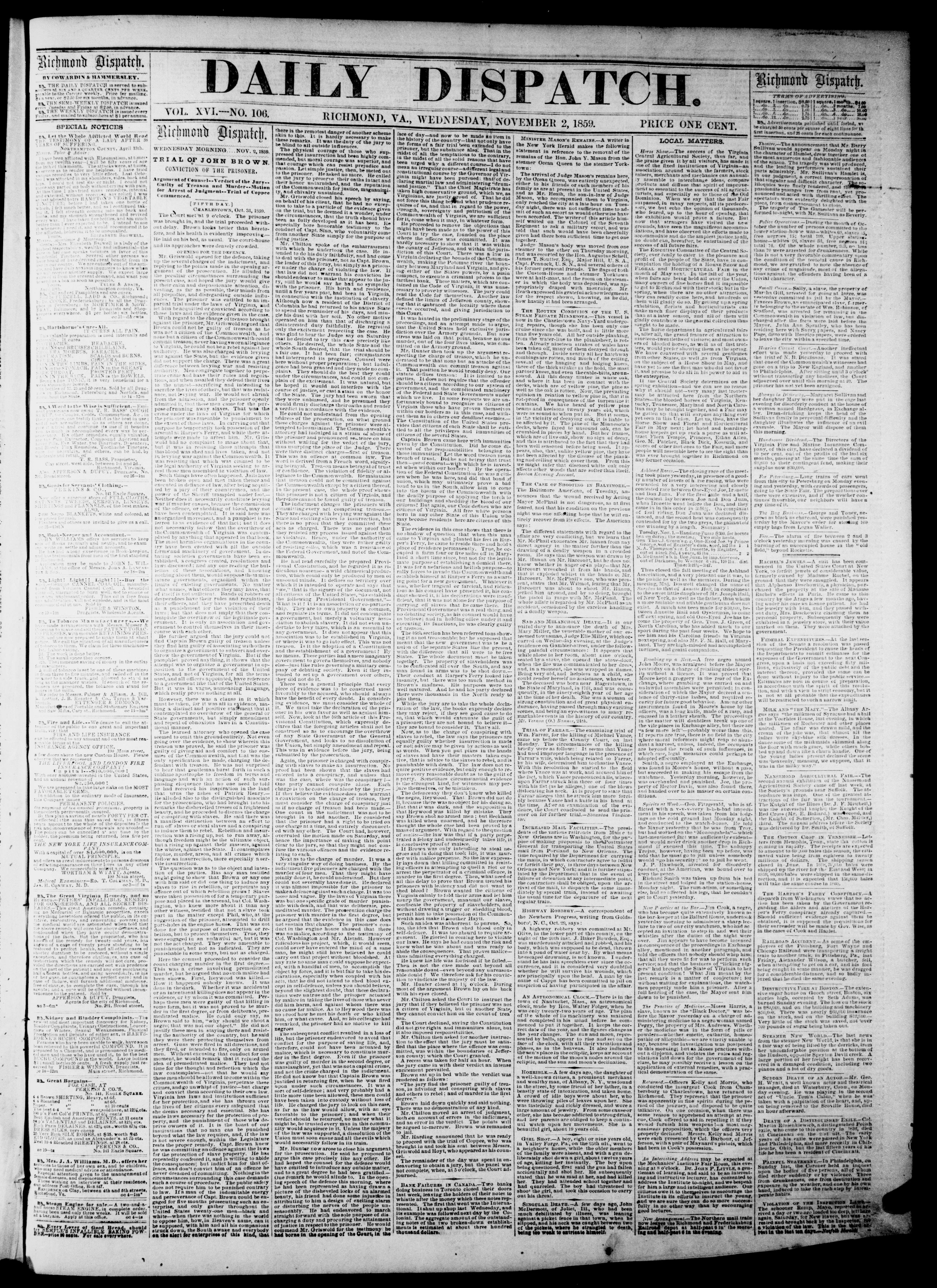

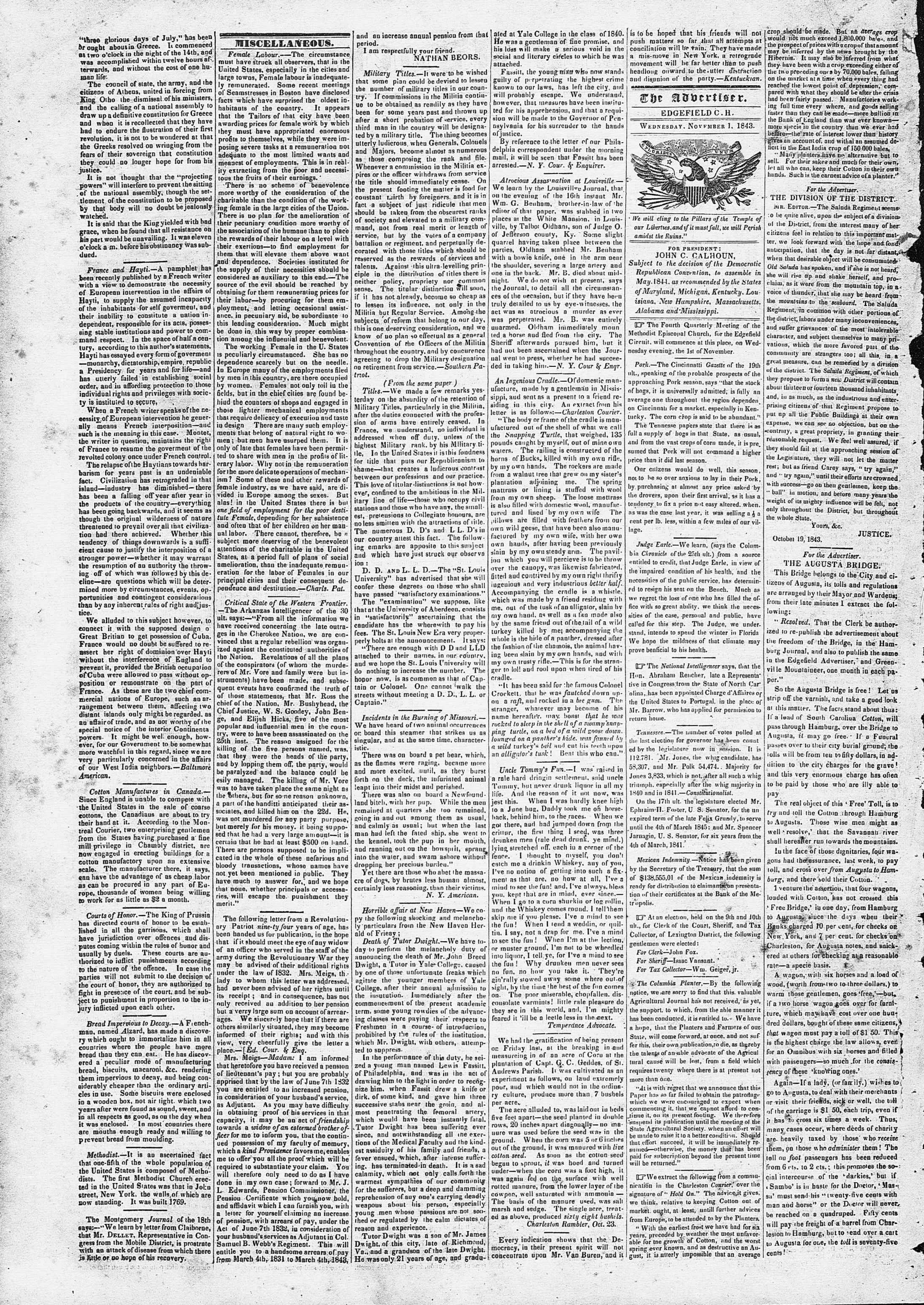
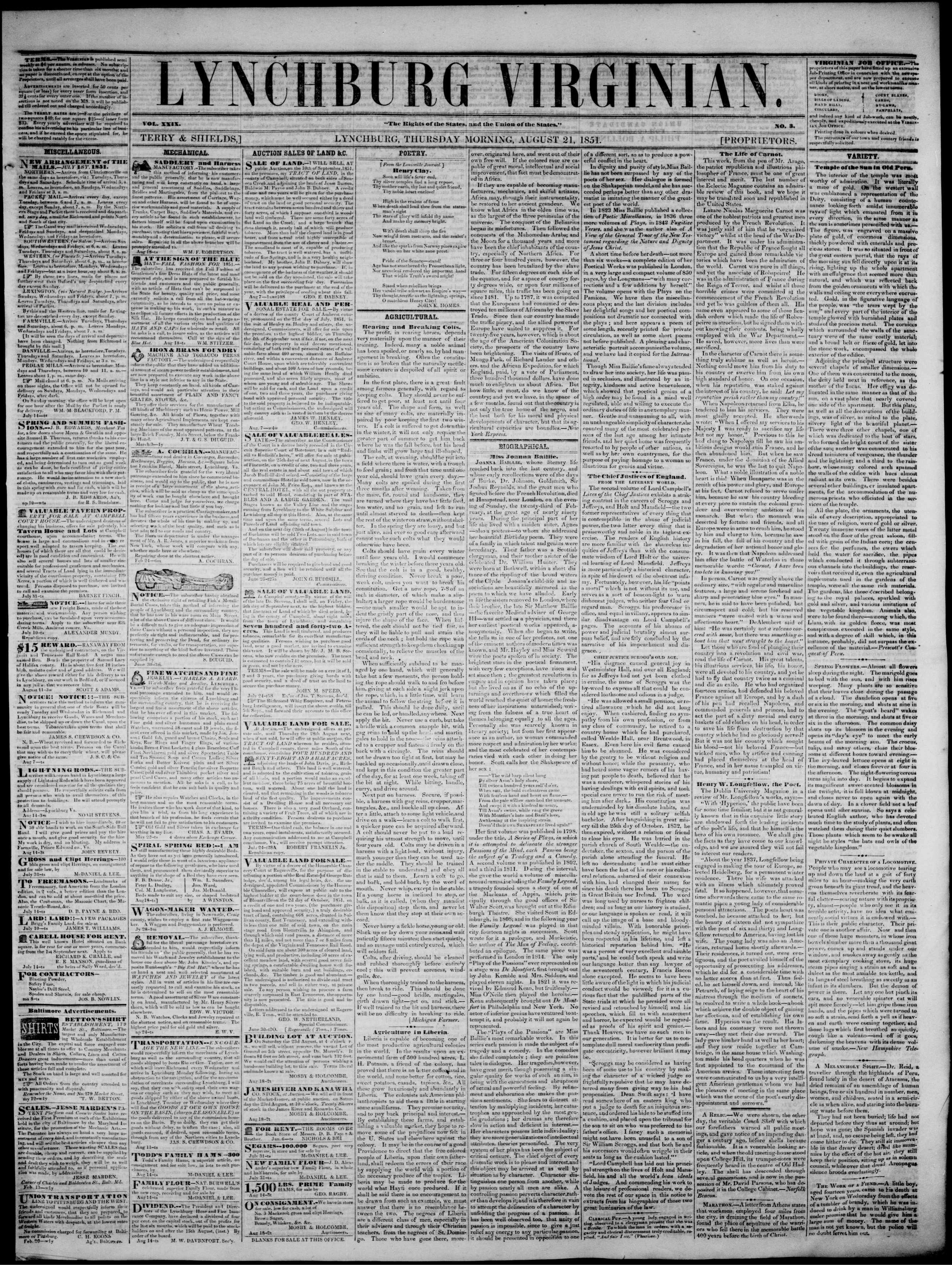


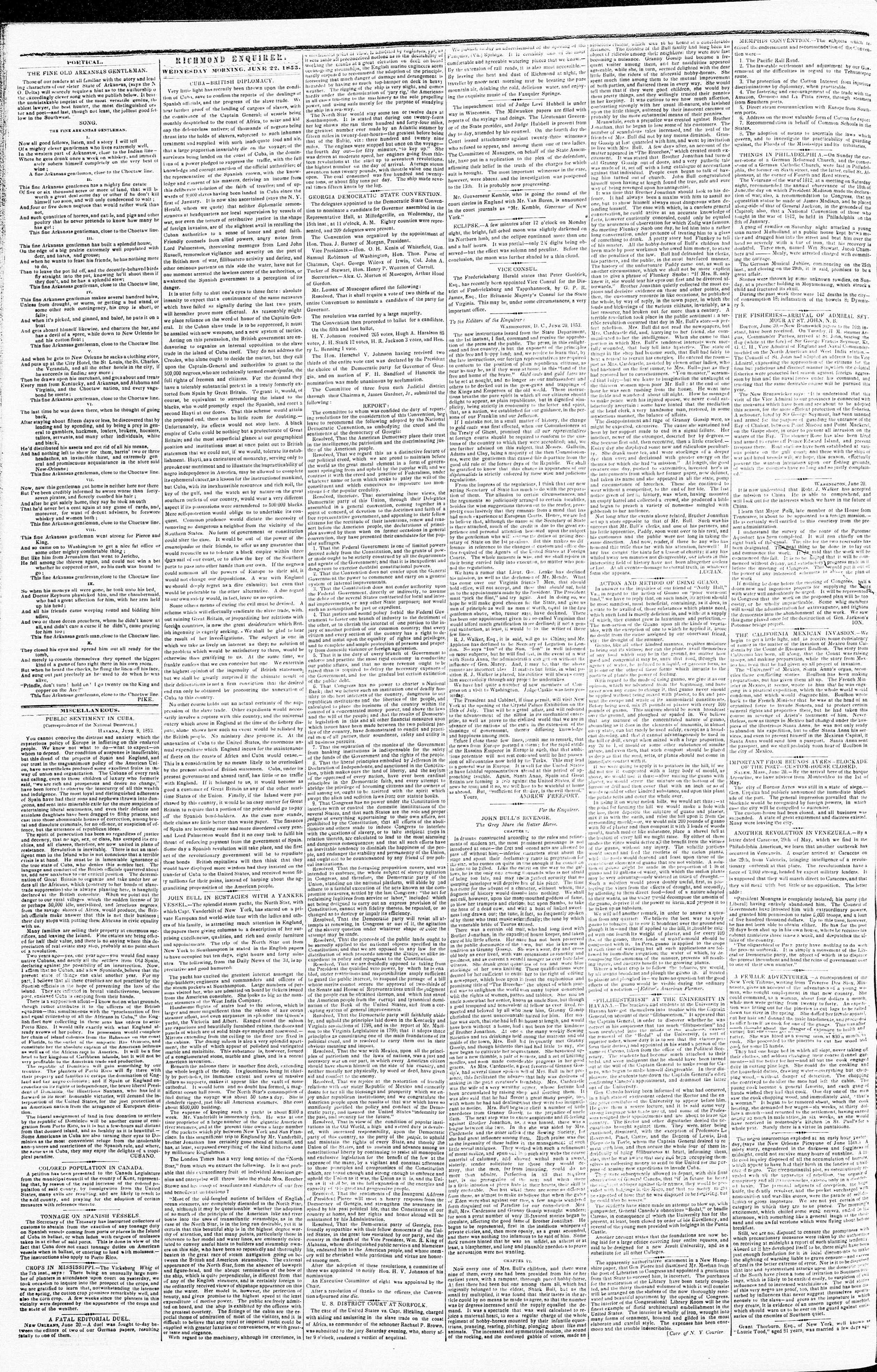

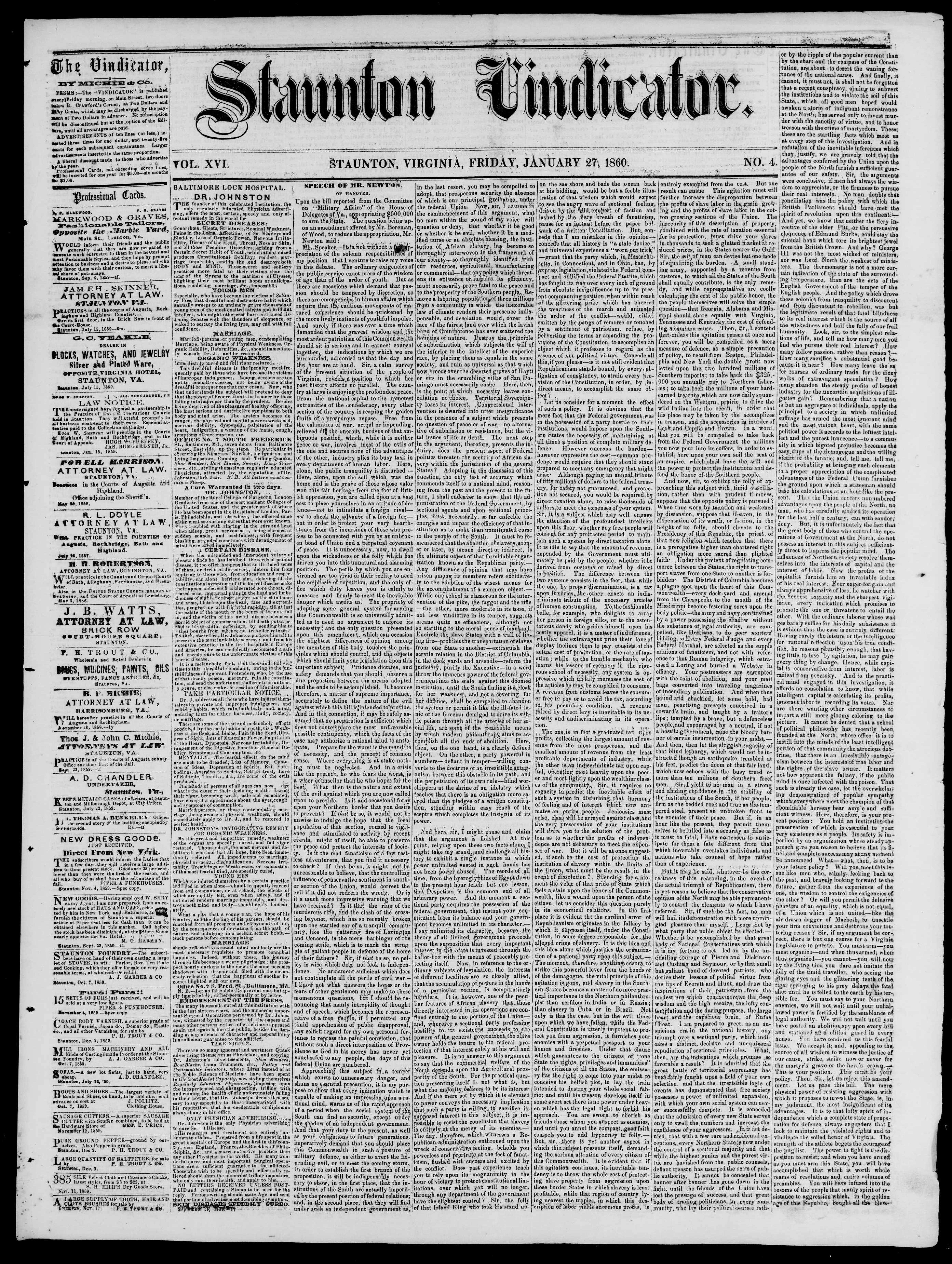
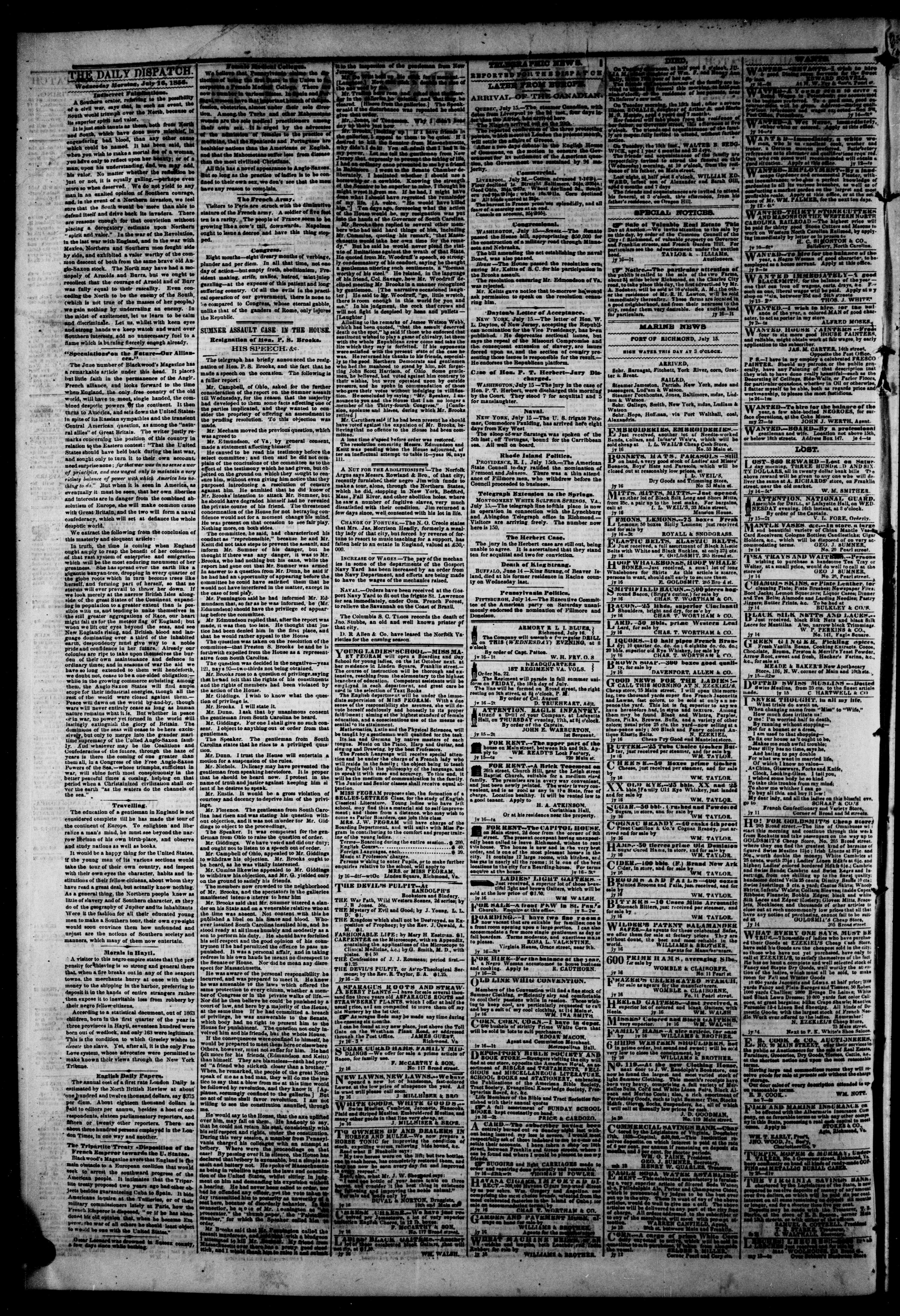
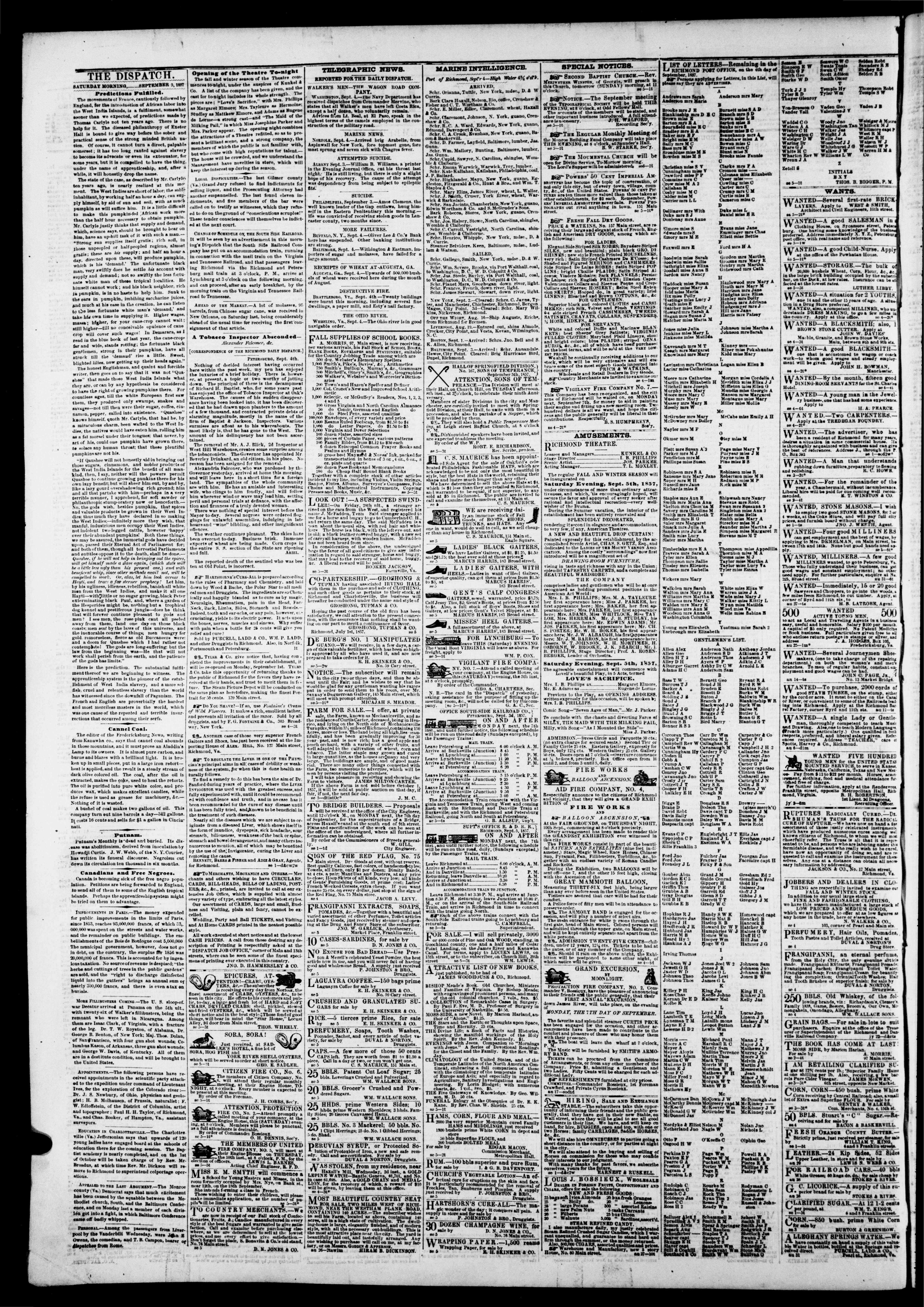


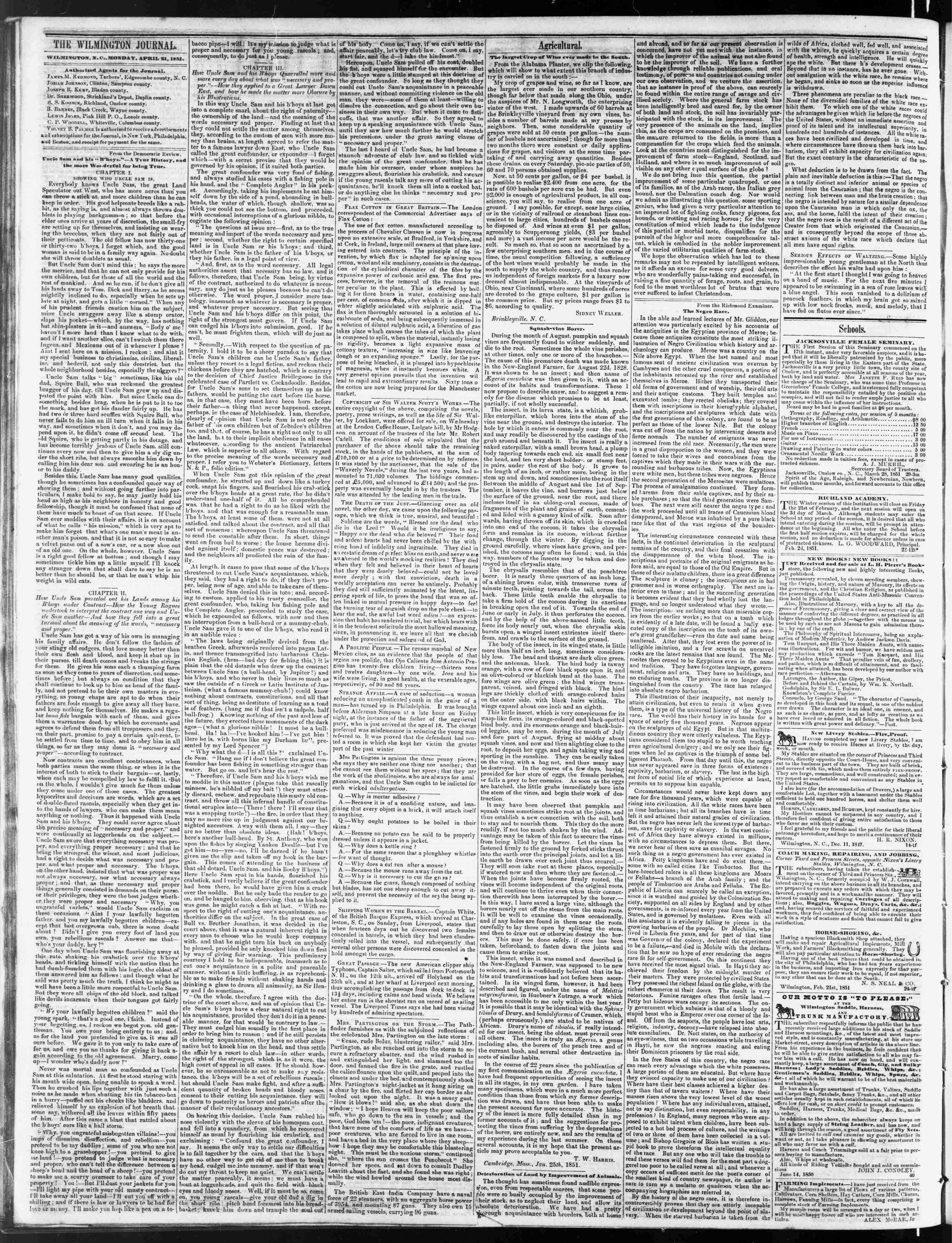


[All articles included in the slides above were taken from Chronicling America, a project produced by The Library of Congress]
Now that we have addressed the background for the formation of Haiti, we can turn to what Americans were saying about the newly formed nation of formerly enslaved persons. And sadly, the quote I mentioned above is more of an exception than the rule. The articles I quote next show how racism was deployed to sow distrust in the American public in this new republic. Take this section of an article from The Weekly Mississippian in 1860:
“Now, to the advice which their particular friend, Newman, offers this “peculiar race.” – He has taken an investigatory trip to Hayti, with the view of ascertaining what there was in the condition of the darkey systems there to encourage the emigration of negroes from North America. And he has found very scant reason to approve of negroism left to itself. There, where the negroes are securely masters, he has seen enough to wish they had not been left to themselves. They have proved their utter incapacity for self-rule or self-independence. When Hayti was under the control of France, and filled the part of a servile land, it was as trim an island as any washed by the ocean. It was cultivated thoroughly. It had prosperity mantled all over its extent. It was a gem of the sea, always kept in polished order – a neat island garden of a vast empire. Now that it is entirely ruled by the negroes themselves, it is like a barren, weed encumbered, uncivilized country. It knows no peace, comprehends no prosperity, appreciates no order, and wallows in military tyranny.”
– The Weekly Mississippian, July 4, 1860, Page 1 of 4, Negroes Natural Slaves
(emphasis added by blog author)
This article demonstrates one example of how Haiti was referenced prior to the American Civil War. It was treated as an example of why not to free slaves, proof that enslaved blacks were not only unable to govern themselves but also better suited as slaves than as free people. Consider this quote from later in the same article:
“Then again, exclaims Mr. Newman, with negroistic ardor: “I thank God! colored men can complain no more for the want of government in this hemisphere. And I hope they are not so ignoble as to want others to do for them what they will not do for themselves.”
– The Weekly Mississippian, July 4, 1860, Page 1 of 4, Negroes Natural Slaves
Can you see how it was used as a warning? Consider this section of an article from the Wilmington Journal in 1853:
“The true question is, what is to be the destiny of this quarter of the world; what race is to inhabit and possess it. Shall it be given up (as to a great part __ its surface) to barbarism – its inevitable fate under the dominion of the black race – or shall it continue to be possessed by the most improving, enterprising, active and energetic breed of men that have every founded empires and people waste places – by that English race, whose conquests more extensive, whose government more perfect than that of Rome, designates it as the fitting instrument in the hands of Providence for the great work of building up a world – that English race of which the original stock has made itself the wonder of mankind – a people entirely peculiar in combining whatever is most dazzling in opulence and power, with well-regulated liberty, and mild and equal administration of law – the most magnificent manifestation of the might and the grandeur of civilized life, that the world, in any age of it, has ever been held. Look at Hayti, and contrast it with New Holland!”
– Wilmington Journal, June 10, 1853, Page 3 of 4, Legare on Slavery in the United States
Does this ring familiar to some of the rhetoric we hear today about how Haitians are unable to act as civilized persons once emigrated to the United States and should submit to American dominance? Take a look at this racist section of an article from The Daily Dispatch in 1857:
“Or, alas, let him look across to Hayti, and trace a far sterner prophecy! Let him, by his ugliness, idleness, rebellion, banish all the white men from the West Indies, and make it all one Hayti – with little or no sugar growing, black Peter exterminating black Paul, and, where a garden of the Hesperides might be, nothing but a tropical dog kennel and pestiferous jungle – does he think that will forever continue pleasant to gods and men?”
– The Daily Dispatch, September 5, 1857, Page 2 of 4, Predictions Fulfilled
Again, this article depicts Haiti as a nation that does not deserve to remain in existence due to the character of its primarily black population. Finally, take a look at this section of an article that uses Haiti as proof of the inability of enslaved blacks to govern themselves in the Edgefield Advertiser in 1843:
“The relapse of the Haytians towards barbarism for years past is undeniable fact. Civilization has retrograded in that island – industry has diminished – there has been a falling off year after year in the products of the country – everything has been going backwards, and it seems as though the original wilderness of nature threatened to prevail over all that civilization had achieved.”
– The Edgefield Advertiser, November 1, 1843, Page 2 of 4, France and Hayti
The treatment is all rather horrible. But it is sadly all too common in history.
Why Were These Stereotypes and Lies Promulgated?

You might ask, why were these claims about Haiti as proof of black inferiority so prevalent? It is because slave-owning Americans were terrified of the idea of slave rebellions, especially after the infamous Nat Turner’s Rebellion in 1830. Take a look at this quote from an article in the Alexandria Gazette in 1856:
“The recent frequency of rumors in regard to slave insurrections has not failed to attract attention. Within the past three months there have not been less than half a dozen such rumors, and whether altogether reliable or not, their coincidence of occurrence with the late election agitation, is not without matter for grave consideration. Universal opinion points to one as having a connection, immediate or remote, with the other; but whether so or not, the happening of several of those alarms at widely different points, within a short interval, is ominous.”
– Alexandria Gazette, December 10, 1856, Page 2 of 4, The Effects of Slave Agitation
This line of thought was very prevalent in the decade leading up to the American Civil War. Slaveholders were terrified that their slaves might follow in the example of Haiti, or that the slaves would be granted their freedom through the efforts of primarily Northern abolitionists. Consider a section of this article from the Staunton Vindicator in 1860 quoting a speech on “northern aggression” that was given at that time:
“Remove a laboring population of three millions from a community in which the inexorable law of climate renders their presence indispensable, and desolation would cover the face of the fairest land over which the lavish hand of Omnipotence has ever scattered the bounties of nature. Destroy the principle of subordination which subjects the will of the inferior to the intellect of the superior race, by placing them as equals in the same society, and ruin as universal as that which now broods over the deserted groves of Hayti or sits in the crumbling villas of San Domingo must necessarily ensure. Here then, is the point at which necessity leaves conciliation no choice.”
– Staunton Vindicator, January 27, 1860, Page 1 of 4, Speech of Mr. Newton of Hanover
(emphasis added by blog author)
This fear of enslaved persons rising up and freeing themselves by American southerners was also recognized internationally, as seen in this article that was published in the London Times after the trial of John Brown and republished in the Newbern Weekly Progress in 1860:
“Formerly, the North contented itself with attacking the planters in newspapers or speeches and decoying away or giving shelter to their negroes; but now the abolitionists have gone a step further and the crusade is for the slaughter of the white people, and the establishment of a half-caste republic, after the model of the Central American communities. The Virginians may hitherto have been contented to live under the same government as people who merely wrote at them and preached at them; but when it comes to revolution and murder, the case is widely different. The state which produced Washington, Jefferson, and Monroe might be excused for declining to descend to the level of Hayti or Costa Rica. Men of the purest English blood may well shrink from turning their country into a region in comparison with which Mexico would be gentle and enlightened. But there are still more pressing considerations. After all; security for life and property is the great object, and the Southerns have now been called upon to decide whether they can, in justice to themselves their wives and children, live under the same federation with men who make no secret the purpose to revolutionize the South by force of arms.”
– Newbern Weekly Progress, January 24, 1860, Page 2 of 4, The Political Crisis in the United States
(emphasis added by blog author)
Slaveholding members of southern states wanted the world to only think of Haiti as a failed nation. An example of the inferiority of formerly enslaved blacks, and proof that slavery was good for the inferior Africans. And so they started a smear campaign against that nation, claiming that the country’s failures as proof of black inferiority, despite the fact that the nation may have failed because of the efforts of the surrounding predominantly white nations, such as the United States and France.
Efforts to Restrict Haiti’s Development in the 19th Century
In the years that followed Haiti’s formation, two factors truly helped to stymie its growth as a nation. The first came from Haiti’s former mother nation, France, and the second the United States.
France, incensed at the loss of its former slave colony, refused to recognize the country of Haiti, and pushed for other European nations to do the same. It was not until 1825 that France recognized the republic, and that was only because of the extreme “reparations” that France required Haiti to agree to. According to the Council for Foreign Relations, those reparations amounted to up to eighty percent of Haiti’s revenues between 1825 and 1947. Imagine that the price of winning your freedom requires not only a decade of blood but the majority of your earnings as well for the rest of your lifetime, and your children’s lifetimes. No country would be able to prosper with such a heavy burden, but Haiti had no other option for recognition, as France was an incredibly powerful international player in the nineteenth century.

The second factor that stymied Haiti’s development was the refusal of the United States to recognize Haiti until the efforts of Abraham Lincoln in 1862. With the southern states in open rebellion with the American Civil War, the most ardent barriers for recognition were removed from the United States Congress. Prior to that point, the United States primarily restricted trade with Haiti unless it was done on favorable terms for Americans, with an emphasis on exporting goods instead of importing Haitian products. That meant that Haitians were paying more, exporting less, and all the while were not officially recognized by the powers they were so often trading with. This played an important factor in Haiti agreeing to pay the French reparations, as Haiti’s biggest and closest potential trading partner, the United States, was not going to go out of its way to help the newly formed nation due to the efforts of its southern planters.
This is not to say that Haiti did not have its own internal political issues. It did. For years, the Island nation was split in its control, and different factions fought for dominance, often with violence. However, they were not set up to succeed. They were set up to fail. And Haiti was not unique for its political instability during the nineteenth century. France, the former mother nation of Haiti, erupted in full-scale rebellions and revolutions from 1789-1797, 1830, and 1848, without even including the years that Napolean subjected Europe to continental wars between 1797-1815, and the many other wars they took part in that same century. The United States of America almost collapsed with the American Civil War as we have already discussed. And yet, it is Haiti that Americans thought of as a violent and unruly nation of barbarians in American Newspapers. It is rather clear the reason why. They were black, former slaves.
Comparing Haiti to Other Countries and Colonies in American Newspapers
It was also common in the nineteenth century to compare and contrast Haiti with other slave colonies in the world. Consider two sections of this article published in American papers at the behest of members of the newly formed Dominican Republic’s government (a nation which was formed after a civil war in Haiti, comprised of half of the former Island of Hispaniola that was under Spanish control prior to the French Revolution):
“The east end of the island of St. Domingo, formerly was known as the Spanish Possessions, now form the Dominican Republic. Its extent is 33,000 square leagues of 25 to a degree. This Republic has been formed by the white portion of the island rising in rebellion against the black Government of Hayti. For twenty years and upwards, the whites have submitted to a most humiliating oppression.”
“We trust that steps will be taken to acknowledge the independence of the Dominican Republic. The sympathies of our race, Caucasian as it is, must be with the whites of the Dominican Republic struggling with the African race of Hayti.”
– The New Era, December 29, 1845, Page 2 of 4, The Dominican Republic
Or this section of an article comparing Liberia with Haiti in the Lynchburg Virginian in 1851:
“Liberia may be made to produce for the world what Hayti once produced. If it shall be said there is no encouragement to be drawn from such an example, we must answer that there is no resemblance between the two. The negroes of Liberia are a different class of men, especially in their advisers and through their Christian teachers, from the negroes of St. Domingo.”
– Lynchburg Virginia, August 21, 1851, Page 1 of 4, Agriculture in Liberia
Cuba was also often referenced and compared with Haiti during the nineteenth century. In the 1840s, Americans became interested in attempting to annex Cuba from Spain. Some southern Americans even went to Cuba in 1850 and 1851 to attempt to fight for Cuban independence. President Polk even tried to buy Cuba in 1854. Take this article written in the Wilmington Journal in 1851:
“Cuba will be independent of the Spanish Crown, and with Cuba will go Porto Rico, next to Cuba the most valuable of the West Indian Islands; and through time also Jamaica, although at a considerable interval. These would from the necessity of the case, soon become States of the Union; and depend upon it, that these Island States would be among the richest, and most valuable members of our Confederacy. With the gold in California, and the tropical products of the West Indies, we would have everything that the heart of man could desire. And occasionally we might amuse ourselves by thrashing the negroes in Hayti into good manners, and after a while, elevate them to the position of slaves. The Island might then become valuable, and with a good population of masters, form a valuable accession.”
– Wilmington Journal, August 1, 1851, Page 2 of 4, The Island States
(emphasis added by blog author)
What a disgusting way to amuse themselves. Southern Americans did not want a second nation of former slaves on their doorstep. Consider this section of an article published in the Richmond Enquirer in 1853:
“To grant it, would, of course, be equivalent to surrendering the island to the blacks, who would promptly expel the Spanish, and erect a second Hayti at our doors.”
– Richmond Enquirer, June 24, 1853, Page 4 of 4, Cuba: British Diplomacy
Southern Americans lived in fear of Haiti for what it might mean for themselves. And so, they posited disgusting, racist rumors about them in an attempt to keep Haiti under metaphorical chains, as they could no longer bind them by real ones.
Legal Arguments for Black Inferiority in The United States Which Used Haiti as an Example
I hope no one would think this, but let’s say you claim that the articles I highlighted above were only the statements of a few members of the Southern American community and not representative of what would be the common thought at that time. I would answer by saying that you only need to consider the deployment of references to Haiti in legal arguments, which were often reprinted in Newspapers in the nineteenth century. Specifically, I am referring to the trials of John Brown and the Lemmons Slave Case. Both cases show just how pervasive this line of thought was, as the racist stereotypes and claims about Haiti permeated our justice system.

For those of you who are not familiar, John Brown was an American evangelical and abolitionist who fought in Bleeding Kansas in the 1850s before attempting to start a slave rebellion in Harpers Ferry, Virginia in 1859. He believed that he was an instrument of god sent to the earth to destroy the evil institution of slavery. And he was vilified for it in the American South because he attempted to bring about their worst fears. His trial was a public sensation, with excerpts from it published in many national papers, including The Daily Dispatch in 1859:
“Brown wanted the citizens of Virginia calmly to fold their arms and let him usurp the government, manumit our slaves, confiscate the property of slaveholders, and without drawing a trigger or shedding blood, permit him to take possession of the Commonwealth and make it another Hayti.”
– The Daily Dispatch, November 2, 1859, Page 1 of 4, Trial of John Brown – Conviction of the Prisoner: Argument of Counsel – Verdict of the Jury – Guilty of Treason and Murder – Motion for Arrest of Judgement – Trial of Coppee Commenced
Next, we have the Lemmons Slave Case. The Lemmons Slave Case originated when slaveholders, the Lemmons, traveled from Virginia, a slave state, to New York, a free state, in 1852, bringing their eight slaves. A free black resident named Louis Napoleon who resided in New York learned of the slave’s arrival and petitioned the court with a writ of habeas corpus in an attempt to emancipate the Lemmon’s slaves as they were currently on free soil. This was based on an 1841 law in New York that any slave residing in the state was freed. The Lemmons stated that the slaves were simply being transported to Texas, and was an act of interstate commerce that would mean the slaves remained the property of the Lemmons. The case went all the way up to the New York Court of Appeals, the highest court in the state. The case likely would have been appealed all the way to the U.S. Supreme Court, but the Civil War began before the appeal could be taken up.
The attorney for the Lemmons used the example of Haiti in his argument as proof of the inability and inferiority of black slaves, arguing that slaves were in fact better off enslaved than freed. Take a look at a section of the argument as published in the Richmond Enquirer in 1857:
“2. Negroes alone, and unaided by the guardianship of another race, cannot sustain a civilized social state.
a. This proposition does not require for its support an assertion or denial of the unity of the human race, the application of Noa’s malediction (9 Geo. R. 582) or the possibility that time has changed and may again change the Ethiopian’s physical and moral nature.
b. It is only necessary to view the negro as he is, and to credit the palpable and undeniable truth that the latter phenomenon cannot happen within thousands of years. For all the ends of jurisprudence this is a perpetuity. (Facciolati’s Latin Lexicon “AEthips”)
c. The negro never has sustained a civilized social organization, and that he never can is sufficiently manifest from history, and is confirmed by the rapid, though gradual retrogression of Hayti towards the most profound depths of destitution, ignorance and barbarism. (McCulloch’s Geog. Hayti, pp 683, 4.)
d. That alone and unaided he never can sustain a civilized social organization, is proven to all reasonable minds by the fact that one single member of his race has never attained any proficiency in any art of science requiring the employment of high intellectual capacity. A mediocrity below the standard of qualification for the important duties of Government, for guiding the affairs of society, or for progress in the abstract sciences, may be common among the members of other races; but it is universal among negroes. Not one single negro has ever risen above it. (Matle B_nn’s Geog. book 58 p. 3. Gregoire’s Literature of the Negroes. Biog. Univ. Supt., vol. 56 p. 83, “Gregiore.”)
e. It follows that in order to obtain the measure of reasonable personal enjoyment and of usefulness to himself and other for which he is adapted by nature, the negro must remain in a state of pupilage under the government of some other race.
f. He is a child of the sun. In cold climates he perishes; in the territories adapted to his labors, and in which alone he can be perpetuated, the white man cannot endure continued physical labor; but each can perform its appointed task – the negro can labor, the white man can govern.”
– Richmond Enquirer, October 13, 1857, Page 4 of 4, Argument of Mr. Charles O’Conor in the Lemmon Slave Case
(emphasis added by blog author)
Did you catch the reference to Haiti under point 2(c)? Disgusting. But I think it is incredibly important to read arguments such as this because it gives you an idea of what the supposed educated minds of the day believed. As monstrous as they were.
Why Does This Matter?

The people who are promulgating these disgusting lies about Haitian immigrants eating cats and dogs are the former President, who is currently running for President, and his selection who will serve as Vice President. What these men say matters. People listen to them. People take them seriously. When the lies were repeated during the last Presidential debate, millions of Americans heard them. And that puts these Haitian immigrants, who immigrated to this country legally, at risk of great harm.
In fact, the exact rumors being spread by the former President and his Vice-Presidential candidate are almost exactly the same as lies that were spread in the years leading up to the American Civil War. Still don’t believe me? Take a look at this section of an article published in the Wilmington Journal in 1851:
“In Hayti they achieved their freedom by the midnight murder of their masters. They were protected by civilized States. They possessed the richest Island on the globe, with the richest commerce at their doors. The result is very notorious. Famine ravages often that fertile land. – Petty but hideous wars occupy its sections. The only government which subsists is that of a bloody and stupid beast who is Emperor over one corner of the Island. Off from the seaports, the people have lost arts, religion, industry, decency – have relapsed into absolute cannibalism. Dr. Nott states, on the authority of an eye-witness, that on two occasions while travelling in Hayti, he saw the negroes roasting and eating their Dominican prisoners by the road side.”
– Wilmington Journal, April 26, 1851, Page 4 of 4, The Negro Race
(Emphasis added by blog author)
Oh, won’t you look at that? The same ridiculous lies that Haitians are eating their neighbors. And wouldn’t you look at that, the former President’s adviser is claiming that Haitian immigrants are now eating humans. I suppose some of us have not advanced that far from the repugnant beliefs commonly held in 1851.
The lies and slander that were promulgated in the years leading up to the American Civil War, lies that were promulgated to suggest that black slaves were better off as slaves than as free men, did not simply disappear with the end of the American Civil War. They poisoned Americans’ opinions about a nation that should have been our immediate allies. Instead of supporting a fellow republic that overthrew their tyrannical European overlords, Southern slaveholding Americans sought to disenfranchise their voices. It is incredibly disappointing to see today from men wanting to lead this nation. I can only hope we all realize how disgusting these lies are and embrace the immigrants who help make this country so great. This nation is a nation of immigrants. And we should be proud to welcome people into this country.
This is especially true given that J.D. Vance stated in an interview on September 15, 2024, that he knows that he is lying about the claims that Haitian immigrants are eating pets and is doing it just to draw attention to the issue of immigration. I hope he regrets this decision one day, but I will not hold my breath.
An Aside
First, I want to thank the Library of Congress for making all these articles available to the public through the project Chronicling America. It is an incredible service that they provide.
Second, lest we forget our sins, I have transcribed the entire fifth argument given in the Lemmons Slave Case as published in the Richmond Enquirer. It is incredibly important that we do not forget just how wrong so many Americans were at that time. It is included below:
V. In fact there is no violation of the principles of enlightened justice, nor any departure from the dictates of pure benevolence in holding negroes in a state of slavery.
1. Men, whether black or white, cannot exist with ordinary comfort and in reasonable safety, otherwise than in the social state.
2. Negroes alone, and unaided by the guardianship of another race, cannot sustain a civilized social state.
a. This proposition does not require for its support an assertion or denial of the unity of the human race, the application of Noa’s malediction (9 Geo. R. 582) or the possibility that time has changed and may again change the Ethiopian’s physical and moral nature.
b. It is only necessary to view the negro as he is, and to credit the palpable and undeniable truth that the latter phenomenon cannot happen within thousands of years. For all the ends of jurisprudence this is a perpetuity. (Facciolati’s Latin Lexicon “AEthips”)
c. The negro never has sustained a civilized social organization, and that he never can is sufficiently manifest from history, and is confirmed by the rapid, though gradual retrogression of Hayti towards the most profound depths of destitution, ignorance and barbarism. (McCulloch’s Geog. Hayti, pp 683, 4.)
d. That alone and unaided he never can sustain a civilized social organization, is proven to all reasonable minds by the fact that one single member of his race has never attained any proficiency in any art of science requiring the employment of high intellectual capacity. A mediocrity below the standard of qualification for the important duties of Government, for guiding the affairs of society, or for progress in the abstract sciences, may be common among the members of other races; but it is universal among negroes. Not one single negro has ever risen above it. (Matle B_nn’s Geog. book 58 p. 3. Gregoire’s Literature of the Negroes. Biog. Univ. Supt., vol. 56 p. 83, “Gregiore.”)
e. It follows that in order to obtain the measure of reasonable personal enjoyment and of usefulness to himself and other for which he is adapted by nature, the negro must remain in a state of pupilage under the government of some other race.
f. He is a child of the sun. In cold climates he perishes; in the territories adapted to his labors, and in which alone he can be perpetuated, the white man cannot endure continued physical labor; but each can perform its appointed task – the negro can labor, the white man can govern.
3. Morality, or those dictates of enlightened reason which have been called the law of nature, do not oblige any man to serve another without an equivalent reward for the service rendered.
a. The obligations of charity form no exception to this rule. Charity enjoins gratuitous service to those who are unable to repay; it is not due to sturdy indolence.
b. The universal voice of mankind concedes to the parent a right to the profit and pleasure which may be derived by him from the services of his minor child as a due return for guardianship and nurture.
c. Who shall deny the claim of the intellectual white race to its compensation for the mental toil of governing and guiding the negro laborer? The learned and skillful stateman, soldier, physician, preacher, or rather expert in any great department of human exertion where mind holds dominion over matter, is clothed with power and surrounded with materials for the enjoyment of mental and physical luxuries in proportion to the measure of his capacity and attainments. And all this is at the cost of the mechanical and agricultural laborer, to whom such enjoyments are denied. If the social order, founded in different natural capacities of individuals in the same family, which produces these inequalities is not unjust, who can rightfully say of the like inequality of condition between races differing in capacity that it is contrary to a law of nature, or that the governing race who conform to it are guilty of fraud and rapine, or that they commit a violence to right reason which is forbidden by morality?
4. “Honests vivere, ulterum non laedere et suum cuique tribuere” are all the precepts of the law. The honorable slaveholder keeps them as perfectly as any other member of human society. – (Inet. Bookk 1, tit. 1, Section 3. Bl. Com. 40.-9 Georgia R. 382.)
a. The cruelties of vicious slave owners and the horrors of the slave trade are topics quiet irrelevant. It is universal experience that wealth and power afford occasion for the development of man’s evil propensities; but as are also the necessary means of his improvement, they cannot be called evil in their own nature.
b. The tone of mind which, arrogating to itself superior purity of life and a higher moral tone than in the then existing state of knowledge could be supposed to have existed among the guests at the marriage in Cana of Galilee (John, ch. 2) – enjoins, as a duty, tonal abstinence from wine, is well kept up in the assumption of a political and moral excellence beyond the mental reach of our sires, and the consequent demand for an immediate abolition of slavery.
c. Certain assumptions of the anti-slavery agitators have been too much indulged by the moderate, peaceful and conservative. Chief Justice Marshall let pass uncondemned their irrelevant triviality about the law of nature (6 Peter’s Cond. 36, 10 Wheaton 114), and Chief Justice Taney concedes to them that the negro race, merely because denied political rights, its to be regarded as “unfortunate.” (19 How. p. 407) and “unhappy,” id. 409. The fathers of the Republic, when forming a temporary league in the face of the foe and on the eve of battle (7 Cushing 295) declined to peril all by delay and discord upon a scruple about inserting in the compact an unnecessary word (19 How. 576): but when those to whom for peace sake “an inch” has been thus conceded, proceeding on the “take an ell” principle, demand as a consequence of the precedent, the power to destroy, we must withdraw all such concessions and go back to principles.
– Richmond Enquirer, October 13, 1857, Page 4 of 4, Argument of Mr. Charles O’Conor in the Lemmon Slave Case
Absolutely abhorrent. But it’s our history, and so we must learn from it. Otherwise what is history for?
